

Knowing how to cut chicken breasts properly is the difference between juicy chicken and stringy chicken. Doing it the right way comes down to two simple things: letting it rest and slicing against the grain. If juicy, tender chicken is the goal, read on.
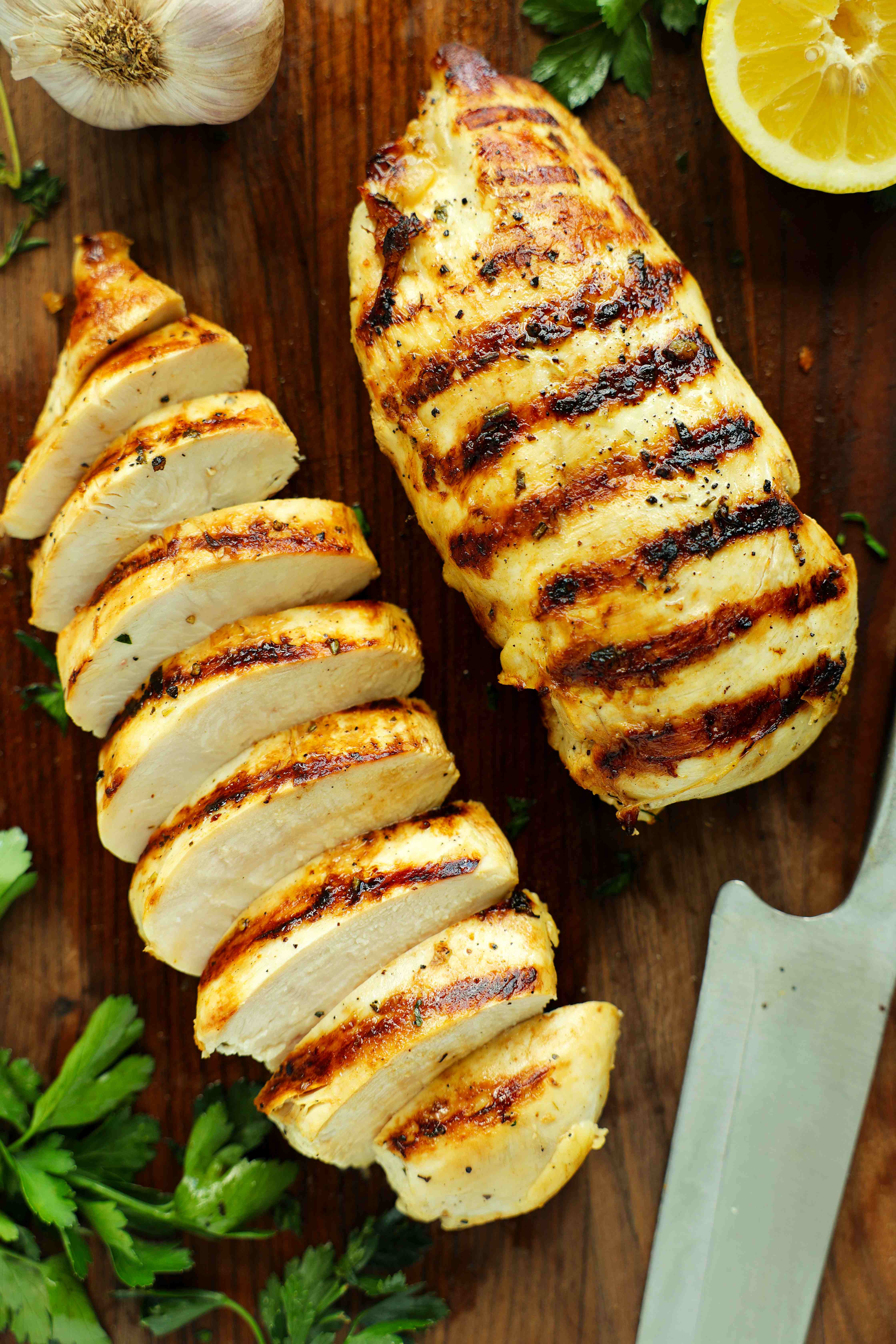
As a recipe developer who cooks chicken breasts constantly and considers dry chicken an arch nemesis, this exact slicing method, in combination with my favorite baked chicken recipe, delivers juicy, tender chicken every time.
Whether you're slicing freshly cooked chicken or leftovers for meal prep, pasta, tacos, or salads, this technique will save you from dry chicken for a lifetime.
Table of Contents
Why Cutting Cooked Chicken Matters
Chicken breasts have long, visible muscle fibers that run in one direction. You can see these fibers both on raw and cooked chicken. In both cases, you want to cut in the opposite direction of the muscle fibers. This is what we call "cutting against the grain."
If you cut with the fibers, each bite will feel tougher and chewier, and juices are more likely to leak out onto your cutting board.
Cutting against those fibers makes the chicken easier to eat, less chewy, and most importantly — juicy.
Cooking Tip: If you want to the deliver the pinnacle of juicy, flavorful chicken to the dinner table, douse it in this 20-minute chicken marinade and hit it with a sprinkle of our favorite chicken seasoning before cooking.
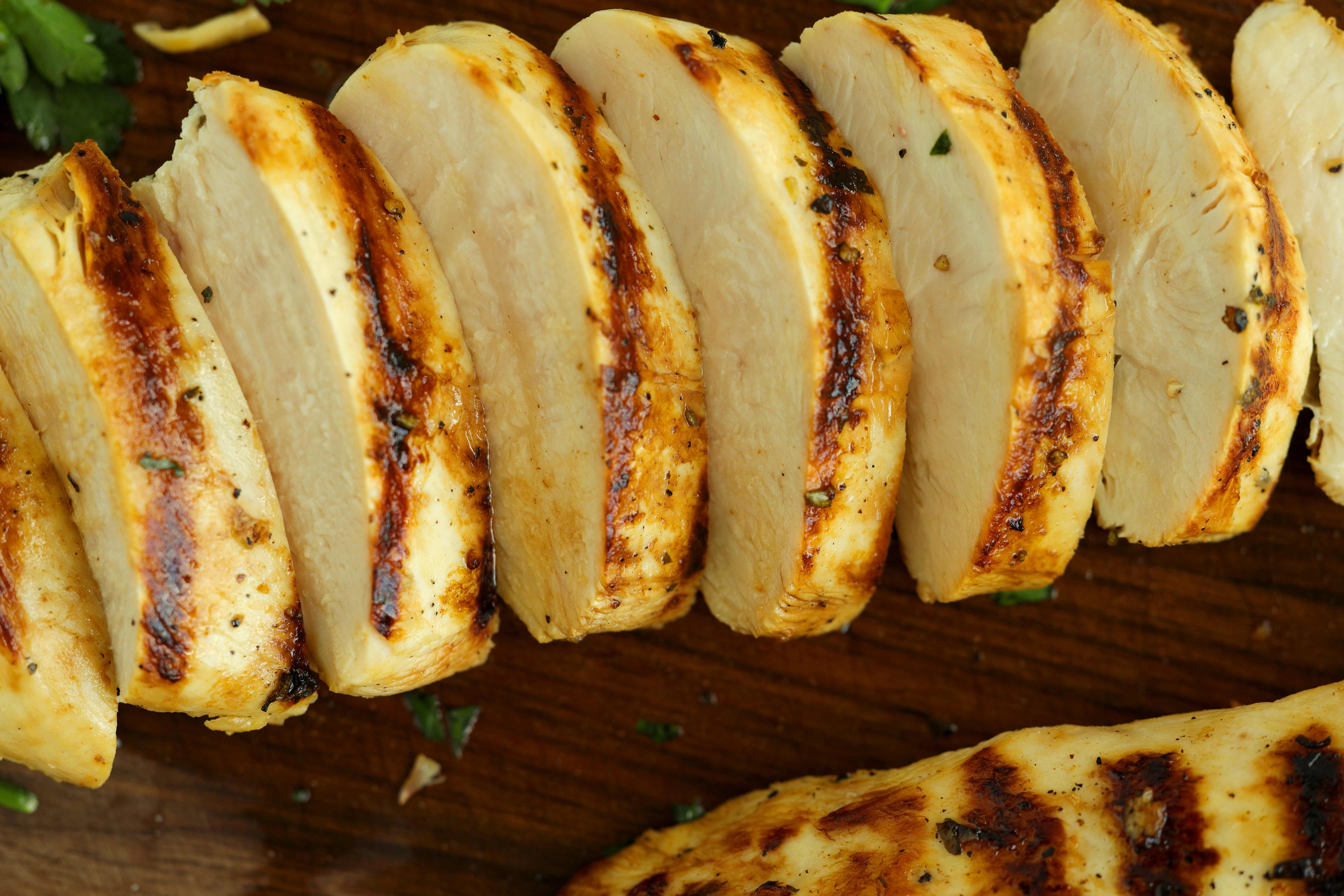
Cutting Against the Grain (This Is What Makes It Tender)
Before you make your first cut, take a second to examine your chicken breasts. Those faint lines you see running across the surface of the chicken breasts (a.k.a. the grain) indicate which direction you want to cut.
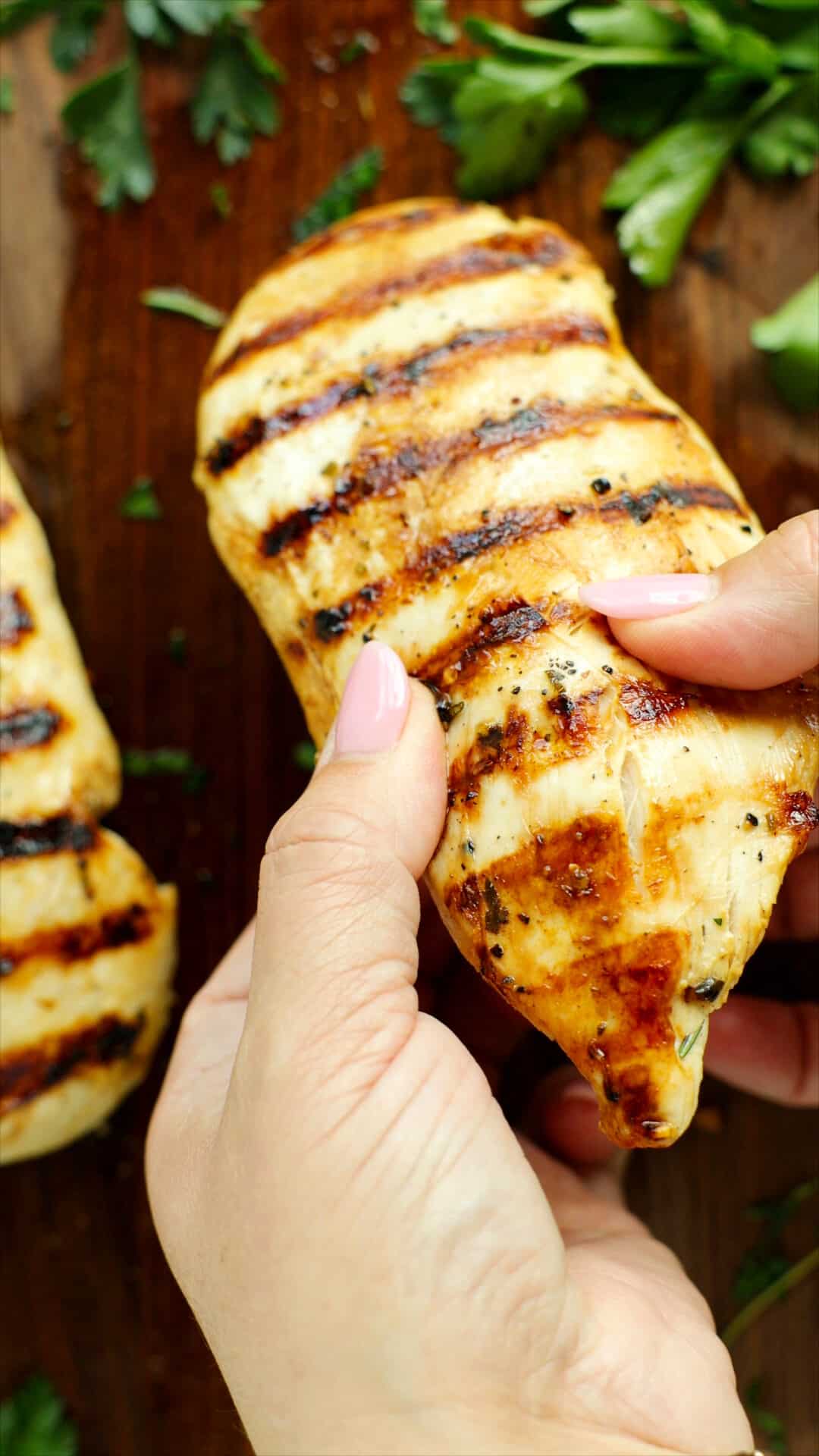
You should always cut chicken in the opposite direction of the grain. Not doing so results in stringy chicken.
Pro Tip: If you have trouble identifying where the grain is, it is where the chicken naturally splits when bent.
How to Cut Cooked Chicken Breasts (Step-By-Step)
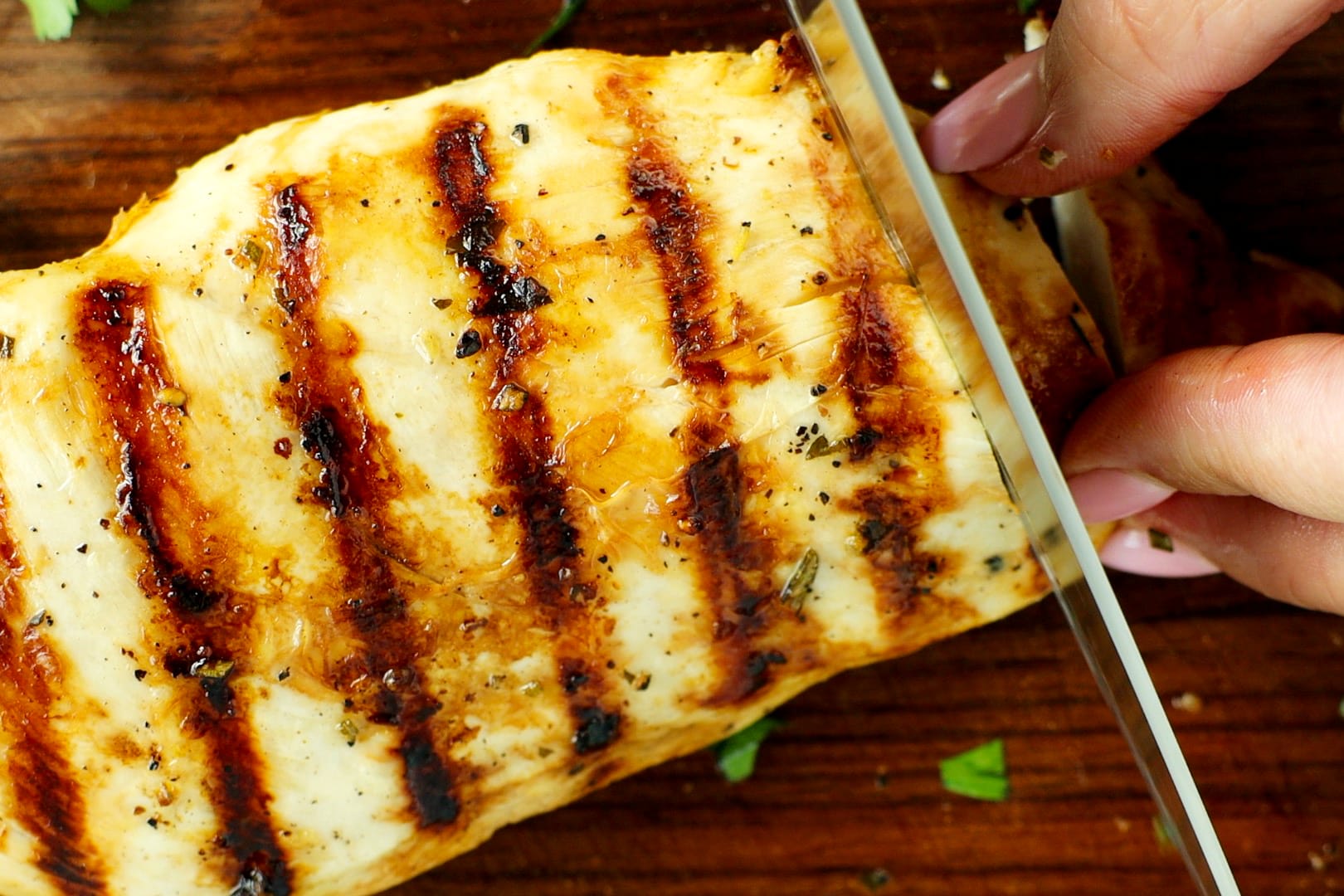
To cut chicken breasts properly, let the chicken rest, then slice it against the grain into even pieces using a sharp knife.
- Let the chicken rest for about 10 minutes after cooking.
- Place the chicken on a cutting board and identify the direction of the grain.
- Turn the chicken so the grain runs left to right in front of you.
- Use a sharp knife to cut even slices (about ¼ to ½-inch thick) across the grain
Pro Tip: If your knife is tearing the chicken instead of gliding through, it likely needs to be sharpened.
Let Chicken Rest Before Slicing
Whether you bake, slow cook, or pan-sear chicken breasts, allowing them 10 minutes to rest before cutting gives the juices time to redistribute, keeping your slices moist.
How to Slice Chicken for Different Meals
While the basics stay the same, how thick or thin you slice chicken breasts and whether they go from cubed, sliced, or shredded, depends on how you're serving it.
Taking an extra minute to slice chicken breasts with your final dish in mind can make a huge difference in how everything comes together.
Salads | Slice into thin strips, like in this copycat Panera Fuji Chicken Salad, or cut into cubes as shown in our buffalo chicken salad.
Pasta | Pasta calls for a slightly thicker slice of chicken that holds up against the texture of the pasta. For example, in classic chicken primavera, the chicken is sliced into ½-inch pieces.
Sandwiches | You'll want to slice chicken breasts into wider, even pieces that layer nicely, like in this ciabatta chicken sandwich.
Comfort Meals | Slightly thicker slices or chunks work best for saucy dishes like chicken pot pie, chicken and dumplings, or chicken a la king.
Meal Prep | Since this often all about even reheating, do your best to keep slices uniform in size so they reheat evenly and portion easily.
Why Slicing Changes the Texture of Chicken
Even when chicken is cooked to perfection, the way it's sliced can completely change how it feels when you eat it. Thin slices feel more tender, while thicker slices are denser.
Thin slices cut in the wrong direction feel particularly stringy, while thicker slices will be chewier. Cutting against the grain shortens muscle fibers and makes each bite (thick or thin) softer.
If your chicken was cooked to the perfect temperature and still seemed dry, it was more than likely sliced the wrong way.
Frequently Asked Questions
Cut chicken when it is warm or room-temperature, after it has rested about 10 minutes. Slicing into chicken too soon results in loss of juices, leaving the chicken drier.
Store sliced chicken refrigerated in an airtight container for 3-4 days.
Yes, but it's best to slice chicken as close to serving time as possible. As chicken in exposed to air, it will naturally begin to lose juiciness. It's best to store whole and slice as needed.

How to Cut Chicken Breasts
Equipment
- Sharp chef's knife
- Cutting board
Ingredients
- Cooked chicken breasts
Instructions
- Let the chicken rest for 5-10 minutes after cooking.
- Identify the direction of the grain.
- Turn the chicken so the grain runs side to side.
- Slice against the grain using a sharp knife into even slices.
Leave a Reply